
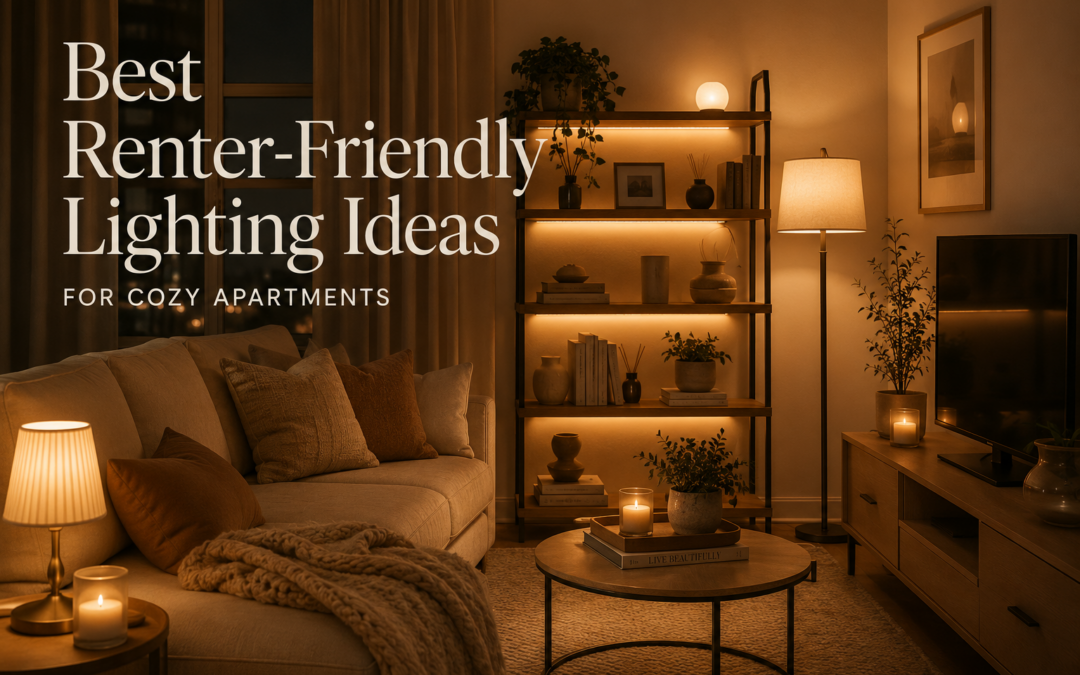
Renter-friendly lighting can completely change how a small apartment feels without requiring permanent installation or expensive renovations. Most rented apartments arrive with the same lighting setup: one overhead fixture per room, placed directly in the centre of the ceiling and somehow managing to make every space feel flatter than it actually is. It works technically. Emotionally, not so much.
A lot of renters assume the problem is the apartment itself — the layout, the lack of natural light, the awkward corners — when very often it’s simply the lighting. And unlike replacing a kitchen or repainting walls, lighting is one of the few things you can completely change without asking anyone for permission.
Good lighting has a strange ability to make temporary spaces feel personal.
Renter-Friendly Lighting Should Feel Layered
The main ceiling light is useful. It just shouldn’t be responsible for the entire atmosphere of the apartment.
Most interiors that feel warm and elevated rely on layered lighting instead: smaller sources placed at different heights throughout the room rather than one bright light from above. Side lighting creates depth. Low lighting softens the room. Shadows make a space feel calmer and more dimensional.
Once you start using softer lighting around the apartment, the overhead quickly starts feeling less necessary. It becomes something practical rather than permanent — useful when cleaning or searching for something, then switched off again.
Atmosphere usually comes from the lights closer to eye level.
Table Lamps Work Better Lower to the Ground
One of the easiest ways to make an apartment feel more intentional is simply changing where light comes from.
Most people place lamps high up on shelves or consoles by instinct, but lower lighting often feels warmer and more atmospheric. A lamp beside the sofa, a small light near the floor, or a warm glow beside a reading chair changes the way the room settles in the evening.
There’s a reason beautifully photographed apartments rarely rely on one bright central light. Softer lighting creates pockets of comfort throughout the space instead.
The lamp itself does not need to be expensive. Placement matters more than most people realize.
Shelving Should Feel Lit, Not Just Visible
Open shelving can either feel practical or beautiful depending entirely on the lighting.
A soft glow beneath a shelf or behind decorative objects immediately creates depth and warmth. Books cast small shadows. Ceramics feel more textured. The apartment starts looking less temporary and more curated.
Warm light is especially important here. Cooler white lighting often feels clinical inside small spaces, while warmer tones make shelving feel calmer and more lived in.
Wireless motion-sensor lighting works particularly well because it can move with the apartment instead of becoming part of the walls. Recharge Lighting’s rechargeable LED lights are designed for exactly that kind of flexibility — subtle lighting that adds atmosphere without requiring permanent installation.
Apartments Should Feel Different at Night
A cozy apartment usually isn’t brighter than everyone else’s. It’s softer.
The transition from daytime to evening matters more than people think. During the day, apartments are functional spaces. At night, they should feel calmer and more intimate.
This shift often comes from very small changes: turning off the overhead light, leaving only a lamp beside the sofa on, adding soft lighting inside the hallway or kitchen, letting darker corners stay darker instead of flooding the room with brightness.
The apartment starts feeling layered instead of exposed.
Some spaces become more beautiful once the sun goes down because the lighting finally starts doing its job.
Many renter-friendly lighting ideas featured onPinterest rely on layered warm lighting and softer evening ambiance.
The Entryway Sets the Tone
The first few seconds after walking into an apartment shape the entire feeling of the space.
A dark hallway with harsh overhead lighting immediately feels cold, even if the rest of the apartment is well designed. A softer entry light changes that experience completely. Motion-sensor lighting near the entrance, beneath a console, or beside a mirror creates a quieter transition into the home.
It’s a small detail, but small details are usually what make interiors feel intentional.
The best renter-friendly upgrades are often the ones that quietly improve everyday life without demanding attention. Warm lighting does exactly that. Recharge Lighting was designed around this idea —soft, wireless lighting that makes temporary spaces feel more personal, comfortable, and lived in.
The best renter-friendly lighting creates atmosphere instead of harsh brightness.